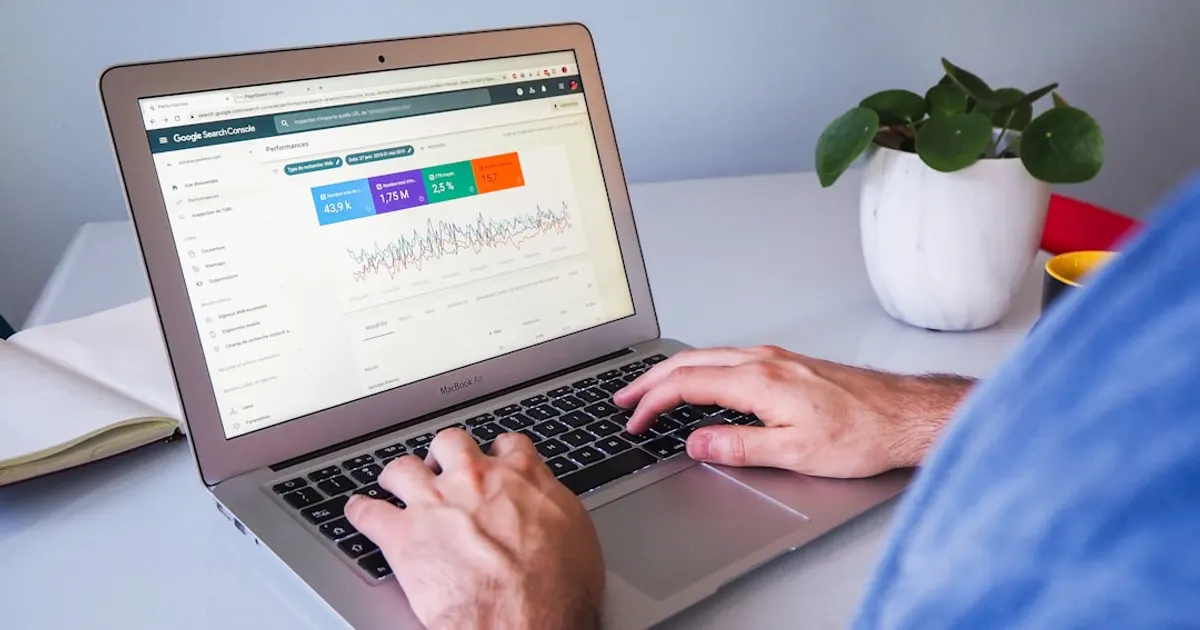
Home services SEO comes down to 15 repeatable steps. Claim and optimize your Google Business Profile. Fix your on-page SEO. Build citations. Earn reviews. Publish content that matches what homeowners search for. Contractors who complete all 15 steps rank in the Google Map Pack and organic results within 3 to 6 months.
Why Most Home Service Websites Don't Rank
I've audited hundreds of contractor websites. The pattern is consistent. The company spent $3,000 to $8,000 on a website, published 5 pages, and never touched it again. No blog. No local content. No schema markup. No review strategy. The site looks fine, but Google has no reason to rank it above the competitor who publishes fresh content every week and has 300 reviews.
Ranking on Google is not a mystery. It follows a clear set of signals that Google has told us about, and that independent research from Whitespark and BrightLocal confirms every year. Google Business Profile signals account for roughly 32% of local ranking weight. On-page signals contribute 19%. Reviews contribute 16 to 20%. Proximity to the searcher accounts for roughly 55% of ranking decisions, and you cannot change where your business is located.
That means you need to dominate the factors you control. This checklist covers all of them.
Google Business Profile (4 Steps)
Your Google Business Profile is the single largest ranking factor you can influence. It controls the local 3-pack, which captures the majority of clicks for service searches. If your GBP is weak, nothing else on this list matters until you fix it. We covered this in depth in our Google Business Profile guide for contractors, but here are the checklist items.
Step 1: Claim, Verify, and Complete Every Field
Log into Google Business Profile Manager. If you haven't claimed your listing, do it today. Verification takes 5 to 14 days by postcard, or minutes by phone or email if Google offers those options for your trade.
Once verified, fill in every field. Business name, phone, address, hours, service area, website URL, business description, services, and attributes. Google ranks complete profiles higher than incomplete ones. Most contractors stop at 60% completion. That gap is costing them calls.
Your business description: Write 750 characters. Include your primary service keywords and service area cities. Don't stuff keywords. Write it for a homeowner who wants to know what you do and where you do it.
Step 2: Choose the Right Primary and Secondary Categories
Your primary category is the most important ranking signal on your GBP. "HVAC Contractor" is different from "Air Conditioning Repair Service." Pick the category that matches your highest-revenue service.
Add up to 10 secondary categories. An HVAC company should add Air Conditioning Contractor, Heating Contractor, Furnace Repair Service, and Duct Cleaning Service. A plumber should add Plumbing Service, Drain Cleaning Service, and Water Heater Repair. Use every relevant category.
Step 3: Add Fresh Photos Every Week
Google confirms that businesses with 100+ photos get 520% more calls than those with fewer than 10. Fresh photos also generate 45% more direction requests and 31% more website clicks. Stop uploading stock photos. Use your phone to capture real completed jobs, your trucks, your crew on site, and your equipment.
Assign one person on your team to take 2 to 3 photos per job. Upload weekly. Geo-tag the images with the city name in the filename before uploading. This small habit compounds into a massive competitive advantage over 6 months.
Step 4: Post Weekly GBP Updates
Google Business Profile posts signal to Google that your business is active. Post completed jobs, seasonal tips, promotions, or team spotlights every week. Include a photo and a call-to-action button.
Businesses that post weekly see 2x more profile views than those that don't. I worked with an HVAC company in Georgia that went from 12 GBP actions per week to 47 within 90 days. The only change was consistent weekly posting and fresh job-site photos. No paid ads. No website redesign. Just showing up consistently on their profile.
On-Page SEO (4 Steps)
On-page SEO accounts for roughly 19% of your local ranking signals. These are the elements on your website that Google reads, indexes, and uses to decide which searches your pages should appear for. For a deeper breakdown, see our home services SEO page.
Step 5: Write Unique Title Tags and Meta Descriptions for Every Page
Your title tag is the blue link in Google search results. It is one of the strongest on-page ranking signals. Every page on your site needs a unique title tag that includes your primary keyword and your city.
Formula: [Service] in [City] | [Company Name]
Example: "AC Repair in Atlanta | Summit Heating & Cooling"
Keep title tags under 60 characters. Write meta descriptions between 145 and 155 characters. Include the keyword, a differentiator, and an outcome. "Same-day AC repair in Atlanta from a company with 300+ five-star reviews. Call now for fast, reliable service."
Step 6: Create Dedicated Service Pages
Do not list all your services on one page. Each service needs its own page with its own URL, title tag, H1, and content.
A plumbing company should have separate pages for drain cleaning, water heater installation, sewer line repair, leak detection, bathroom remodeling, and any other service they offer. Each page should be 800 to 1,500 words, include FAQs, pricing ranges when possible, and describe the process a homeowner can expect.
One page per service gives Google a clear target to rank for each keyword. A single "Services" page with bullet points will lose to a competitor who has 12 detailed service pages every time.
Step 7: Build Location Pages for Every City You Serve
If your company serves 8 cities, you need 8 location pages. Each page should be unique content, not a copy-paste with the city name swapped. Include local landmarks, neighborhoods, zip codes you cover, and any local knowledge that proves you work in that area.
This is where proximity intersects with SEO. Google weighs proximity at roughly 55% for local ranking decisions. You cannot move your business, but you can create content that signals relevance to each city. A location page for "Plumbing Services in Marietta, GA" tells Google your company is a legitimate option for searchers in Marietta, even if your office is 20 minutes away.
Step 8: Use Proper Heading Structure and Internal Links
Every page needs one H1 tag containing the primary keyword. Use H2 tags for section topics and H3 tags for sub-topics and FAQs. Google uses heading structure to understand what your page is about and how sections relate to each other.
Internal links connect your pages together and spread ranking authority across your site. Every page should link to at least 2 other relevant pages on your site. Use descriptive anchor text that includes keywords. Link your service pages to related blog posts. Link blog posts back to service pages. This tells Google your site has topical depth and helps searchers find what they need. For the full strategy, read our local SEO guide for contractors.
Content (3 Steps)
Content is how you capture searches beyond your core service keywords. Homeowners ask questions before they call. "How much does a furnace replacement cost?" "Why is my AC blowing warm air?" Every question is a keyword you can rank for, and every answer is a chance to prove your expertise before the homeowner picks up the phone.
Step 9: Publish Blog Posts That Answer Customer Questions
Think about the last 20 phone calls you received. What did homeowners ask? Those questions are your blog topics. "How much does drain cleaning cost in [city]?" "Should I repair or replace my AC unit?" "How often should I have my furnace serviced?"
Publish at least 2 blog posts per month. Each post should be 1,000 to 2,000 words and target a specific question or topic. Include your service area in the content. Link back to the relevant service page. Add an FAQ section at the bottom.
Data from our campaigns shows that contractors publishing 2+ posts per month see organic traffic grow by 40 to 60% within 6 months. The content compounds. A blog post you publish today will generate leads for years.
Step 10: Add FAQ Sections to Every Service Page
FAQs serve two purposes. They capture long-tail voice search queries and they position your content for Google's AI Overviews and featured snippets. Each FAQ should use an H3 heading formatted as a natural question, followed by a direct 40 to 80 word answer.
Add 4 to 6 FAQs per service page. Use questions from real customer calls. Include FAQ schema markup so Google can pull your answers into rich results. We cover how answer engines change the game in our guide on why SEO matters for home services companies.
Step 11: Build Seasonal and Emergency Content
Home services demand follows seasonal patterns. HVAC peaks in summer and winter. Plumbing spikes during freezes. Landscaping ramps up in spring. Build content around these cycles 60 to 90 days before each season.
"AC Tune-Up Checklist for Atlanta Homeowners" published in March will rank by the time May heat arrives. "What to Do When Your Pipes Freeze" published in October will capture searches when the first cold snap hits. Timing content to seasonal search demand puts your company in front of homeowners at the exact moment they need you.
Technical SEO (2 Steps)
Technical SEO is the foundation. If your site loads slowly, doesn't work on mobile, or has broken markup, nothing else on this list reaches its full potential. The good news: most technical fixes take a developer a few hours and produce lasting results.
Step 12: Fix Site Speed and Mobile Performance
Google uses Core Web Vitals as a ranking signal. Your site needs to load in under 2.5 seconds on mobile. Run your site through Google PageSpeed Insights right now. If your mobile score is below 70, you have work to do.
Common fixes: compress images to WebP format under 150KB, remove unused JavaScript, defer non-critical CSS, enable browser caching, and use a CDN. Most contractor websites are slow because they run on bloated WordPress themes with 30+ plugins. Strip it down or rebuild it lean.
Most plumbing leads come from organic search and Google Maps, not paid ads. If your mobile site takes 5 seconds to load, those leads go to the faster competitor. Homeowners searching "emergency plumber near me" at midnight will not wait for a slow site.
Step 13: Add Schema Markup to Every Page
Schema markup is structured data that tells Google exactly what your page contains. LocalBusiness schema on your homepage tells Google your company name, address, phone number, service area, hours, and review rating in a format it can read without guessing.
Add these schema types at minimum:
- LocalBusiness on your homepage and contact page
- Service schema on each service page
- FAQPage schema on pages with FAQ sections
- Article schema on blog posts
- BreadcrumbList on every page
Use Google's Rich Results Test to validate your markup. Schema won't directly boost rankings, but it increases click-through rates by adding star ratings, FAQ dropdowns, and service details to your search listing.
Reviews and Citations (2 Steps)
Reviews account for 16 to 20% of local ranking weight. Citations verify your business information across the web. Together, they build the trust signals that Google needs to rank you in the Map Pack. For the full playbook, read our complete guide to online reviews for contractors.
Step 14: Build a Review Generation System
You need a repeatable process, not a one-time push. Text every customer a direct link to your Google review page within 24 hours of completing a job. Follow up 3 days later if they haven't responded. Automate this with your CRM or a simple text message template.
Businesses that respond to 80%+ of their reviews see a measurable ranking boost. Respond to every review, positive or negative, within 24 hours. Thank positive reviewers by name and mention the specific service. Address negative reviews professionally and offer to make it right.
Volume matters more than perfection. A company with 250 reviews at 4.7 stars will outrank a company with 30 reviews at 5.0 stars. Aim for 15 to 25 new reviews per month. If you're not hitting that, your process needs fixing. Our guide on why competitors show up above you on Google breaks down exactly how reviews create ranking gaps.
Step 15: Clean Up and Build Citations
Citations are listings of your business name, address, and phone number (NAP) across directories like Yelp, BBB, Angi, Thumbtack, and industry-specific sites. Consistency is everything. If your address says "Suite 100" on Google and "Ste 100" on Yelp, that inconsistency confuses Google.
Audit your citations. Use a tool like BrightLocal or Moz Local to find inconsistent listings. Correct them. Then build new citations on the top 40 to 50 directories for your trade.
Focus on these first: Google Business Profile, Yelp, Facebook Business, BBB, Angi, Thumbtack, HomeAdvisor, your state contractor licensing board, and your local Chamber of Commerce. Each consistent citation is another vote of confidence that your business is legitimate and located where you say it is.
How Long Until You See Results
SEO is not a switch you flip. It's a compounding investment. Here's what our home services SEO clients typically experience:
| Timeline | What Happens |
|---|---|
| Weeks 1 to 4 | GBP optimization, technical fixes, and citation cleanup produce measurable changes in profile views and discovery searches |
| Months 2 to 3 | GBP rankings improve. Map Pack visibility increases for your primary service keywords. Review velocity starts building |
| Months 3 to 6 | Blog content starts ranking. Organic traffic grows. You begin appearing for long-tail searches beyond your core keywords |
| Months 6 to 12 | Compounding effect. Multiple pages rank. Content drives steady traffic. Review count creates a moat competitors cannot quickly close |
Most contractors see meaningful results in 3 to 6 months. The ones who commit to all 15 steps see exponential growth by month 9. The companies that quit after 2 months because "SEO doesn't work" are the same ones buying overpriced shared leads from Angi and Thumbtack a year later.
If you need calls while your SEO builds, that's what home services SEO paired with Google Ads is for. Ads produce immediate calls. SEO builds the long-term pipeline that reduces your cost per lead over time.
Want to know which of these 15 steps your business is missing? A free growth audit shows you exactly where you stand and which fixes will drive calls fastest.
Get Your Free Growth Audit