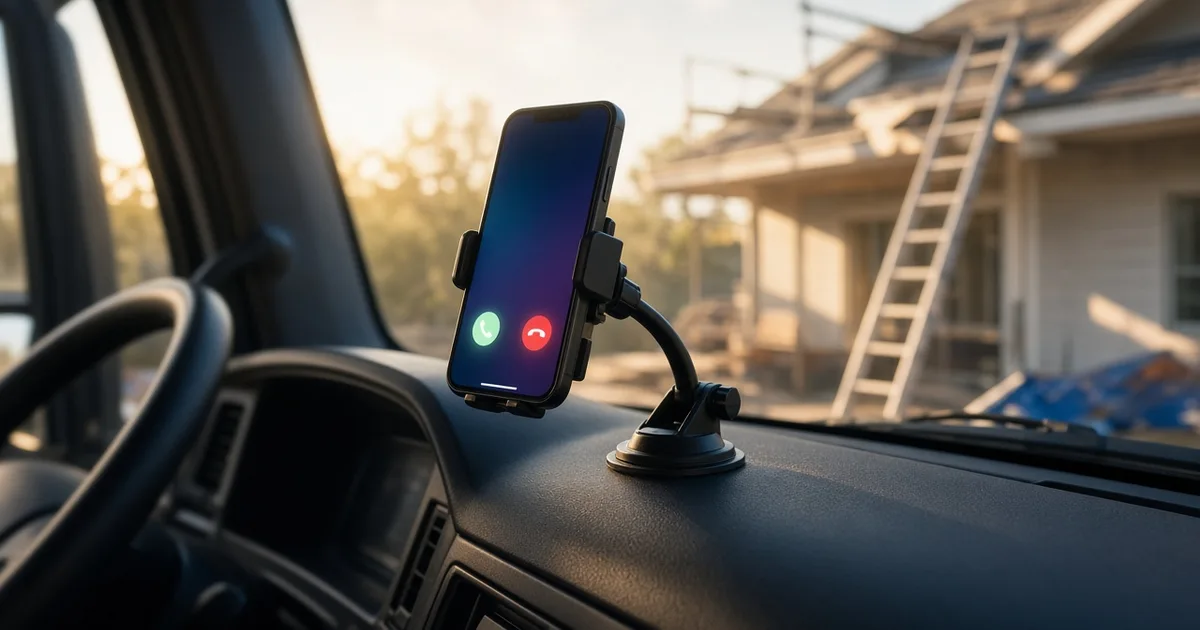
Google made two changes in early October that touch the calls you get from Google. One changes how you're charged for Local Services Ads leads. The other changes what you can write on your Google Business Profile.
Neither one is a crisis. Both are worth knowing about. Here's what changed, in plain English, and what we're already doing about it for our clients.
Change 1: How Google charges for Local Services Ads leads
Local Services Ads are the ads at the top of Google, above the regular ads. A homeowner taps your listing and calls you straight from the search page. You pay per lead, not per click.
On October 8, Google rewrote its help page that explains how those leads work. Four parts of that update matter to you.
A missed call can now count after 20 seconds
You used to pay mostly for calls you picked up. That's changed.
Now, if a call comes in during your business hours and nobody answers, Google can charge it as a lead if the caller stays on the line for more than 20 seconds.
A few details worth knowing:
- "Business hours" means the hours on your Google Business Profile. If your profile says you open at 7am, Google expects someone to pick up at 7am.
- Ad schedules count too: a missed call is only charged when it falls inside both your ad schedule and your profile hours.
- Phone menus have their own rule. If your system says "press 1 for service," the 20 seconds starts after the caller presses that key, and a caller who hangs up before pressing anything isn't charged.
- Voicemail counts. A call that goes to voicemail during business hours and stays on the line more than 20 seconds can be charged, even without a message left.
- Answered calls work the same as before: if you pick up, ring time doesn't matter, and Google judges the call on the conversation.
The simple version: the hours on your profile matter more now than they did a month ago.
Repeat calls from the same customer are charged once
Once a lead is charged, follow-up calls or messages from that same customer aren't charged again, as long as there's been contact within 15 days and it's the same phone number or email.
If 15 days go by with no contact, a new call from that person counts as a new lead.
So a homeowner who calls three times in one week about the same water heater is one lead, not three.
Google keeps reviewing each lead for 30 days
Every lead now shows one of four statuses: Charged, Not charged, In review, or Credited.
Google keeps checking a lead for 30 days after it comes in. If it turns out to be a duplicate, spam, or poor quality, Google credits it back to your account on its own.
Google also removed its old list of examples of leads that wouldn't get credited. Its automated review handles that now. You can still rate any lead using the feedback survey on the Leads page.
Local Services Ads are moving into Google Ads
Google is moving Local Services Ads accounts into Google Ads, as a Performance Max campaign built for pay-per-lead.
What stays the same: you still pay per lead, and your ads still show in the same spots on Google Search and Google Maps. Your past leads, messages, and call recordings move with you.
What doesn't move: your old performance reports. Google emailed advertisers and told them to back up that data by October 15. We're handling that for you (more on that below).
Change 2: What you can say on your Google Business Profile
On October 6, Google added a new "For merchants" section to its Google Maps content policy. It spells out what business owners can and can't put on their profile.
Your profile description
Your listing, including the business description, can't include:
- Time-bound promotions, like "$50 off this month"
- Pricing, like "drain cleaning from $99"
- Direct calls to action, like "Call today for a free estimate"
Your description should say who you are, what you do, and where you work. Think of it as the permanent facts about your company.
Your posts
Posts can't include email addresses, phone numbers, social media links, or links to websites that aren't related to your business.
You don't lose anything here. The Call button on your profile already uses your verified business number, so a post doesn't need the number typed into it.
Offer posts and update posts are still allowed. That's where your seasonal deals and news belong now.
The simple version: your profile is for the facts. Your posts are for the offers.
What we're already doing for you
We're doing this right now for every client these changes touch:
- We're checking your profile hours against when your phones get answered. If your profile says 7am to 7pm but the office picks up 8 to 5, we'll flag it and fix it with you.
- We're reviewing your call routing: phone menus, voicemail, after-hours forwarding, and who picks up when. Every call during your listed hours should reach a person who can book the job.
- We're cleaning up your profile description and posts: prices, deadlines, and "call now" lines come out of your description, and typed-out phone numbers, emails, and outside links come out of your posts. Your offers move into proper offer posts instead.
- We're exporting your Local Services Ads reports now, so you don't lose your history when the move to Google Ads happens.
What you need to do
Just two things:
- Answer calls during the hours listed on your Google profile.
- Tell us if your hours change: new season, new crew, holiday schedule, anything. A quick reply is all it takes.
That's it. We'll handle the rest.
The bottom line
A missed call during business hours was always a lost job. Now it can also be a charged lead. The fix isn't complicated: make sure your listed hours match when someone's there to pick up.
On the profile side, Google wants your listing to describe your business and your posts to carry your offers. We're sorting that out for you now.
We've spent 20+ years helping companies turn phone calls into booked jobs. Changes like these are part of the work.
Not a Watson & Co. client yet? We work with one client per trade per market. Get your free Market Domination Audit and see if your market is available. No commitment, no credit card.